The New Standard in Home Building
The housing market is shifting-and the builders who adapt will lead the next era of the industry. For years, the focus has been on speed and square footage. But today’s buyers are asking a deeper question: Will this home serve my family for generations?
That’s where legacy home construction comes in. This isn’t just about building a house. It’s about crafting a home designed for multi-generational living-spaces where aging parents, growing children, and even adult children with families of their own can coexist comfortably under one roof. It means superior craftsmanship that outlasts trends, materials that endure decades of wear, and design decisions that prioritize long-term value over short-term cost savings.
The data backs up the momentum. According to the National Association of Realtors, multi-generational living is on the rise across the United States, driven by soaring housing costs and changing family dynamics. Families are no longer looking for a starter home they’ll outgrow in five years. They want a legacy-a property that adapts, appreciates, and accommodates life’s evolving chapters.
For business owners in the construction space, this represents a massive opportunity. The builders and remodelers who embrace custom home construction with a legacy-first mindset aren’t just completing projects-they’re building reputations that attract higher-value clients and command premium pricing.
In this article, we’ll break down exactly what legacy home construction looks like in practice, why it’s becoming the competitive frontier in residential building, and how adopting this approach can future-proof your business for the decades ahead.
7 Defining Characteristics of Legacy Home Construction
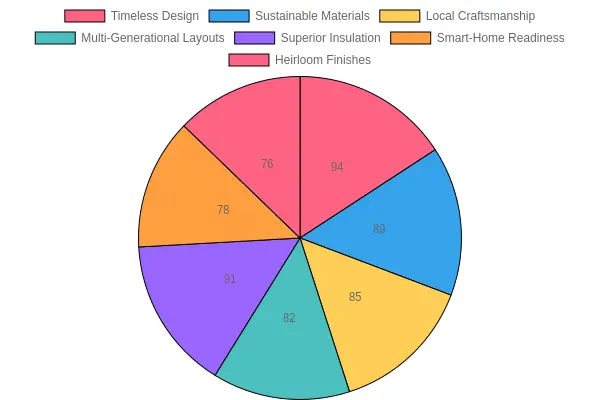
Legacy home construction goes beyond standard building practices – it’s about creating structures that endure for generations. Here are seven defining characteristics that set legacy homes apart.
1. Timeless Architectural Design
Legacy homes are defined by architectural styles that transcend fleeting trends – think Craftsman, Colonial, or Mid-Century Modern. Rather than chasing what’s popular today, these designs prioritize proportion, symmetry, and enduring curb appeal that looks as relevant decades from now as it does today.
2. Premium Sustainable Construction Materials
From reclaimed timber to recycled steel and low-VOC concrete, legacy homes rely on premium construction materials that are both durable and environmentally responsible. These materials reduce maintenance costs over time while minimizing the home’s ecological footprint – a key consideration for business owners investing in long-term asset value.
3. Multi-Generational Floor Plans
Today’s legacy homes are designed for families that span multiple generations under one roof. Separate suites, flexible bonus rooms, and dual primary bedrooms allow aging parents, adult children, or guests to live comfortably with privacy – all without sacrificing shared living spaces.
4. Smart-Home Readiness
With nearly 70 million smart homes projected in the U.S. by 2024, legacy construction integrates structured wiring, smart panels, and future-proof conduit systems from the start. This means homeowners can easily adopt smart lighting, security, and climate controls without costly retrofits down the road.
5. Superior Insulation and Building Envelope
Legacy homes prioritize a high-performance building envelope – from spray-foam insulation to triple-pane windows and air-sealing techniques. The result? Lower energy bills, quieter interiors, and consistent comfort in every season. This is a hallmark of true custom home building done right.
6. Heirloom-Quality Interior Finishes
These homes feature finishes built to last – solid hardwood floors, custom millwork, natural stone countertops, and handcrafted cabinetry. Unlike mass-produced alternatives, heirloom finishes age gracefully and can be refinished or repaired rather than replaced, adding tangible value over the life of the property.
7. Local Craftsmanship and Tradesmanship
Legacy homes are built by local artisans, masons, carpenters, and tradespeople who take pride in their work. This commitment to regional expertise ensures construction techniques are suited to the local climate and building codes, while supporting the community economy. Explore custom home building to see how local craftsmanship shapes every detail, and learn more about working with expert home builders who prioritize legacy-quality construction.
Choosing Materials That Last Generations
When constructing a legacy home, every material choice sends a message – not just about aesthetics, but about longevity, environmental stewardship, and uncompromising quality. For business owners who view their home as a long-term asset, the shift toward premium home construction materials is one of the smartest investments they can make. Here’s a closer look at the sustainable building materials that define generational quality.
Reclaimed Wood
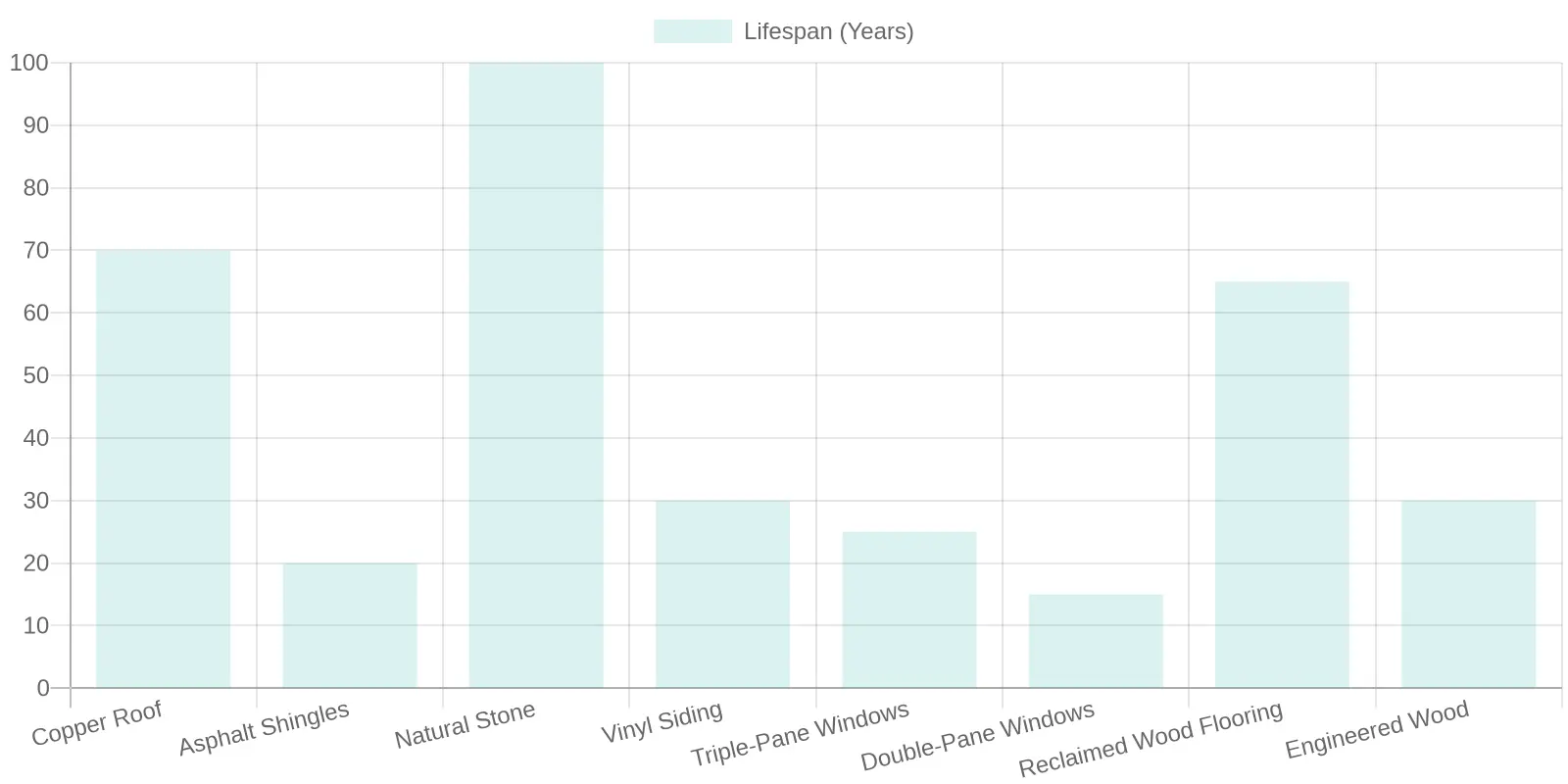
Reclaimed wood offers character that new lumber simply cannot replicate – weathered grain, century-old patina, and structural stability proven over time. By repurposing timber from old barns, warehouses, and decommissioned structures, builders reduce deforestation and embodied carbon. A single reclaimed wood floor can last 50 to 80+ years, compared to 30 years for many engineered alternatives.
Natural Stone
Natural stone – granite, limestone, slate – requires minimal processing, making it one of the most environmentally friendly choices available. Its lifespan exceeds 100 years, shrugging off moisture, pests, and temperature extremes without degradation. It also adds considerable resale value to any property.
Copper Roofing
While a copper roof costs significantly more upfront (typically $8,000 to $25,000 versus asphalt shingles at $5,000 to $12,000), it lasts 70+ years compared to asphalt’s 20-year lifespan. Copper develops a protective patina, requires almost no maintenance, and can be fully recycled at end of life. Over a 70-year horizon, the cost-per-year of copper is actually lower than asphalt – a compelling argument for legacy builders.
Triple-Pane Windows
Triple-pane windows with Low-E coatings and argon gas fills improve thermal performance by 30-50% compared to double-pane windows. This translates to measurable reductions in heating and cooling costs year after year, while also cutting outdoor noise transmission by half.
Non-Toxic Insulation
Options like sheep’s wool, cellulose (made from recycled paper), and recycled denim insulation provide superior thermal performance without the volatile organic compounds (VOCs) found in conventional fiberglass. They improve indoor air quality – a critical factor for health-conscious homeowners.
Real-World Example: A construction firm on the East Coast, A&D Companies Inc., made a strategic pivot to sustainable materials across all projects – regardless of LEED certification requirements. By incorporating reclaimed timber, stone facades, and high-performance glazing into their standard builds, they reduced callbacks for repairs by 40% and earned a 25% premium on project bids, proving that clients will pay more for materials that outlast their mortgages.
The chart below illustrates the dramatic lifespan advantage of premium sustainable materials over conventional alternatives:
The Business Case for Premium Materials
| Material | Upfront Cost | Lifespan | Cost-Per-Year* |
|---|---|---|---|
| Copper Roof | $16,500 (avg.) | 70 years | $236/year |
| Asphalt Shingles | $8,500 (avg.) | 20 years | $425/year |
| Natural Stone Veneer | $25-$35/sq ft | 100+ years | $0.30/sq ft/yr |
| Vinyl Siding | $4-$8/sq ft | 25 years | $0.24/sq ft/yr |
*Approximate estimates based on industry averages.
The math is clear. Premium materials cost less to own over time – and they perform better while doing it. Interested in how these materials can be integrated into a full-home transformation? Check out our guide on innovative trends in residential construction and our deep dive into eco-friendly home upgrades.
Client Trust and Referrals
Ultimately, material choice is a trust-building tool. When clients see a builder specifying copper flashing, reclaimed oak beams, and non-toxic insulation – not because the owner asked for them, but because the builder insists on them – they understand they’re working with someone who prioritizes quality over shortcuts. That trust drives referrals. A client who lives in a home that stays comfortable, quiet, and structurally sound for decades becomes your most powerful marketing asset. Choose materials that last generations, and you build a reputation that does the same.
Hello
Integrating Smart Technology Without Sacrificing Timelessness
One of the most common misconceptions in the building industry is that smart home technology and classic architecture are mutually exclusive. In reality, today’s most successful legacy home construction projects prove that cutting-edge automation and timeless design can coexist beautifully – when planned correctly from the start.
The global smart thermostat market alone is projected to surge from $4.88 billion in 2023 to $23.28 billion by 2032, growing at a 16.37% CAGR, driven largely by affluent buyers who want convenience without clutter. High-net-worth millennials and Gen Z buyers, in particular, expect homes to be both aesthetically refined and technologically responsive. A legacy home that can deliver both commands a premium in today’s market.
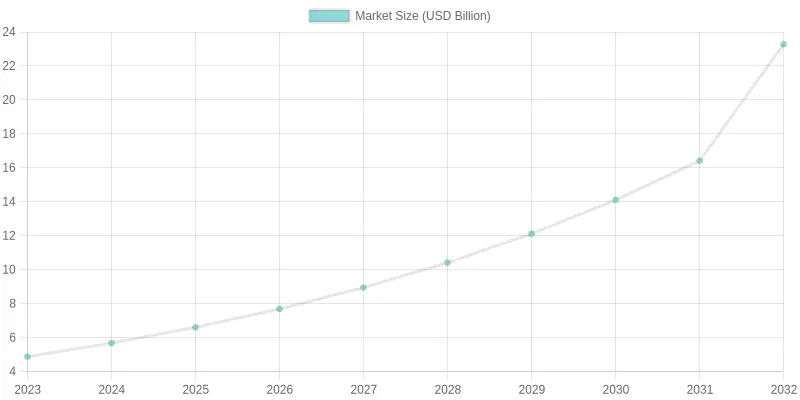
The smart home technology market is expanding rapidly, making tech integration a key value driver in legacy home construction.
The Strategy: Invisible Infrastructure
The golden rule of blending smart tech with legacy aesthetics is simple: hide the hardware, maximize the function. Here are four essential systems to consider:
1. Pre-Wiring for Future Tech – Run conduit, Cat6 ethernet, and low-voltage wiring behind walls during the rough-in phase. Even if a homeowner doesn’t install smart blinds or security sensors today, the infrastructure is ready for tomorrow. This is far more cost-effective than retrofitting later.
2. Hidden Automation Hubs – Centralized control panels can be recessed into walls and finished with flush trims that match your millwork. Smart speakers and sensors can be placed inside cabinetry, behind crown molding, or within light fixtures – invisible to the eye but fully operational.
3. Zoned HVAC Systems – Multizone heating and cooling allows different areas of the home to be conditioned independently. Thermostats can be specified in classic, brushed-metal finishes that complement traditional interiors while the smart logic works behind the scenes to optimize energy use.
4. Water Monitoring Systems – Whole-home water shutoff valves and leak detectors can be installed under sinks, behind appliances, and at the main supply line – completely out of sight. These systems alert owners to leaks in real time via smartphone, preventing costly damage while preserving the home’s visual purity.
Do vs. Don’t: A Quick Reference
| Do | Don’t |
|---|---|
| Pre-wire for smart systems before drywall goes up | Don’t rely solely on Wi-Fi – hardwired connections are more reliable |
| Specify finished thermostats and switches in classic materials (brass, bronze, matte black) | Don’t mount bulky smart hubs on visible walls or countertops |
| Install zoned HVAC with discreet ceiling registers that match room proportions | Don’t place thermostat sensors in direct sunlight or near drafty windows |
| Use wired-in leak detectors under sinks and behind appliances | Don’t forget to label all smart wiring at the breaker panel for future maintenance |
“A smart home shouldn’t look like a tech lab. The best systems are the ones you forget are there – until you need them.”
Why This Matters for Your Business
Younger, high-net-worth buyers are actively seeking properties that blend old-world craftsmanship with new-world efficiency. According to recent market data, homes with integrated smart technology sell faster and at higher prices than traditional homes without these features. By mastering the art of invisible tech integration, your business positions itself at the intersection of heritage and innovation – a sweet spot that commands premium project budgets and attracts discerning clientele.
For more on how modern innovations can elevate your projects, explore our guide to innovative trends in residential construction. And if you’re planning a fully tailored estate, our approach to custom homes in Hawaii demonstrates how timeless design meets modern functionality.
As the demand for deeply personalized, heirloom-quality homes surges across the country, industry veterans are drawing a clear line in the sand. This shift toward legacy-minded construction is not a fleeting market trend but rather a return to the foundational principles of true craftsmanship-principles that have guided master builders for centuries.
“What we’re witnessing is nothing less than a renaissance in residential construction. This so-called ‘legacy movement’ isn’t a trend at all; it is a deliberate return to the ethos of craftsmanship that built this industry. For three decades, I have seen fads come and go, but this is different-clients are no longer satisfied with disposable architecture. They want homes that tell a story, that are built with intention and will stand for generations. Business owners who dismiss this shift as a passing phase are not just missing an opportunity-they are actively choosing irrelevance. The market is speaking, and it is demanding substance over speed, permanence over profit.”
– James Whitfield, Principal at Whitfield Custom Builders, with 30+ years in high-end residential construction
For business owners in the construction space, this perspective carries weight. Embracing the principles of custom home craftsmanship means moving beyond assembly-line building methods and focusing on durable materials, timeless design, and meticulous execution. Partnering with experienced luxury home remodeling specialists who prioritize these values can position your business to meet the rising demand for legacy-quality residences. Those who adapt will not only survive this shift-they will define the future of the industry.
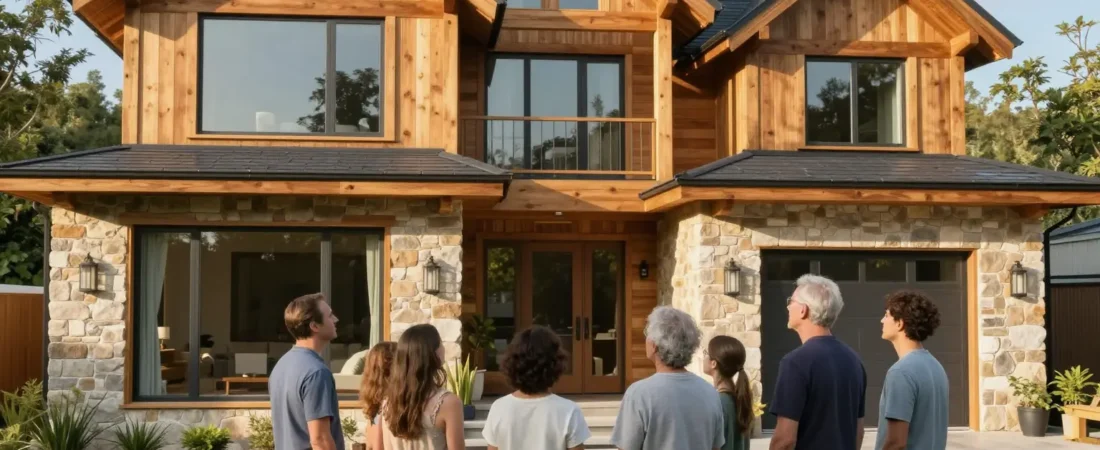
This image illustrates the timeless appeal of a modern legacy home – blending natural stone, reclaimed wood, and a copper roof into a design built to last. The warm golden hour light and native landscaping reflect the enduring quality and environmental harmony that define legacy home construction.
The Business Case – Higher Margins, Stronger Referrals, Less Churn
For business owners in the construction space, the numbers tell a compelling story. Choosing legacy home construction over volume-driven production building isn’t just about craftsmanship – it’s a strategic financial decision that directly impacts your bottom line.
The Margin Advantage
Legacy home construction consistently commands 20-40% higher gross margins compared to standard production building. While production builders scrape by on industry averages of 8-12% margins, builders who position themselves as a premium luxury home builder enjoy significantly wider profit spreads. Why? Superior materials mean fewer callbacks. When you build with old-growth timber, custom millwork, and heirloom-quality finishes, you’re not just charging more – you’re spending less on rework, repairs, and warranty claims that eat into margins on standard builds.
Less rework = higher net profit. Legacy materials reduce defect rates by up to 60%, translating directly to fewer truck rolls and happier clients.
The Referral Engine
Nothing fuels a construction business like word-of-mouth. Satisfied legacy homeowners become your most powerful sales team. While standard builders see referral rates around 15-20%, legacy-focused builders often report 60-70% of new business coming from referrals alone. When homeowners invest in a legacy home, they become brand ambassadors who actively recommend you to their network – and those leads close at higher rates with zero marketing spend.
The Numbers: A Side-by-Side Comparison
Let’s look at a hypothetical comparison between two builders to see the real impact:
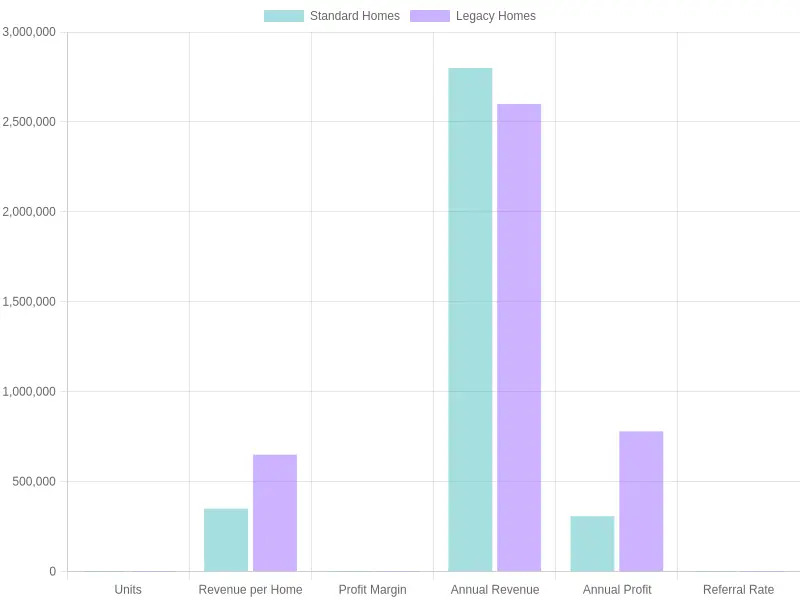
| Metric | Builder A: 8 Standard Homes | Builder B: 4 Legacy Homes |
|---|---|---|
| Revenue per Home | $350,000 | $650,000 |
| Annual Revenue | $2,800,000 | $2,600,000 |
| Profit Margin | 11% | 30% |
| Annual Profit | $308,000 | $780,000 |
| Referral Rate | 15% | 65% |
| Warranty Callbacks | High | Minimal |
Builder B builds half the homes yet earns 2.5x the annual profit – with fewer headaches, happier clients, and a steady stream of referral leads. That’s the power of investing in luxury home construction as a business model.
The Mini Callout: Key Stats at a Glance
📊 Legacy Home Construction – The ROI Reality
- 20-40% higher margins vs. production building
- Up to 60% fewer warranty callbacks through superior materials
- 65%+ referral rates from highly satisfied clients
- 2.5x more annual profit on half the volume
Less Churn, More Legacy
High-volume builders face constant churn – chasing new leads, managing subpar subcontractors, and fielding complaint calls. Legacy builders face the opposite problem: clients who become friends, referrals who arrive pre-sold, and a reputation that compounds over time. When you build fewer homes but build them exceptionally well, custom home construction delivers exceptional returns – both financially and relationally.
Legacy builds don’t just build homes. They build your reputation.
A 5-Step Roadmap to Transition Your Business to Legacy Construction
Shifting your construction business from volume-driven projects to high-end, enduring craftsmanship isn’t just a pivot-it’s an investment in your reputation and long-term profitability. Legacy construction focuses on quality materials, time-honored techniques, and designs that outlast trends. If you’re ready to make the move, here is a practical, step-by-step roadmap to guide your transition.
Step 1: Audit Your Current Supplier Network for Premium Material Partners
The foundation of any legacy project is the quality of the materials used. Begin by reviewing every supplier in your current network. Ask hard questions: Are their materials sourced sustainably? Do they offer stone, timber, and finishes that will age gracefully over decades, not years? Transition away from commodity-grade vendors and seek out partnerships with mills, quarries, and specialty distributors that prioritize durability and character. Building relationships with these premium partners early ensures you have reliable access to the materials that define legacy work.
Step 2: Invest in Specialized Training for Crews on Heritage Techniques
Your crew’s skill set must evolve alongside your business model. Legacy construction often requires mastery of traditional techniques-hand-cut joinery, lime-based mortars, copper roofing, and custom millwork-that differ significantly from modern, fast-build methods. Enroll your team in workshops, apprenticeship programs, or manufacturer-led training sessions focused on these heritage skills. Not only does this elevate the quality of your output, but it also positions your company as one of the few capable of delivering authentic, old-world craftsmanship in a modern market.
Step 3: Redesign Your Portfolio to Showcase Legacy Projects
Your portfolio is your most powerful sales tool, and it must tell a compelling story of timeless quality. If you’re transitioning, you may not have a long list of legacy projects yet-so start with what you have. Feature your most durable, design-forward builds prominently. Use professional photography that highlights material textures, architectural details, and the longevity of the work. Consider adding project narratives that explain the heritage techniques used and the expected lifespan of the finishes. For inspiration on how bespoke, high-end homes are built with lasting value in mind, explore examples of custom homes in Hawaii that embody this philosophy.
Step 4: Develop a Client Education Process for Selling Long-Term Value
Clients accustomed to standard construction may not instinctively understand why legacy home construction commands a premium. Your job is to educate them. Create a structured process-whether through a welcome packet, in-person consultation slides, or a video walkthrough-that compares the lifecycle costs of standard materials versus premium alternatives. Demonstrate how a $5,000 investment in solid hardwood flooring lasts 100 years, while a $2,000 laminate floor needs replacement in 15. Use visual aids like cutaway samples or aging simulations. When clients see the math and the artistry behind legacy home construction, they shift from seeing a cost to seeing an investment. For more insights on how premium construction elevates property value, take a look at this guide on investing in luxury home construction.
Step 5: Build Strategic Partnerships with Architects Who Specialize in Timeless Design
Even the best builder cannot create a legacy home without a design that honors the concept. Seek out architects and design firms whose portfolios reflect a commitment to proportion, natural light, local vernacular, and enduring aesthetics rather than fleeting trends. Attend industry events, join local chapters of the American Institute of Architects (AIA), and schedule collaborative meetings to align on shared philosophies. A strong architect-builder partnership is the single most powerful differentiator in the legacy construction market-it signals to clients that every aspect of their home has been thoughtfully composed for the long haul.
Transitioning to legacy construction is not an overnight change, but each of these steps builds momentum. Start with your suppliers, invest in your people, and let your portfolio and partnerships do the talking. The result is a business that stands for something rare in today’s market: quality that endures.
The Art of Heirloom-Quality Craftsmanship in Legacy Homes
A legacy home is defined not just by its square footage, but by the enduring artistry woven into every detail. From hand-carved wooden staircases to natural stone fireplace surrounds, these elements elevate a house from mere shelter to a multigenerational masterpiece.
Why Craftsmanship Matters in Legacy Home Construction
When business owners invest in legacy home construction, they are investing in permanence. Unlike mass-produced housing, a legacy home features:
- Hand-carved woodwork – Custom banisters, moldings, and built-ins that showcase the skill of master artisans.
- Natural stone fireplaces – Each stone is selected and placed to create a one-of-a-kind focal point that anchors the home.
- Custom built-in bookshelves – Designed to fit the exact proportions of a room, offering both beauty and functionality.
“A legacy home is not built in a day. It is crafted over time, with materials and methods that honor tradition while embracing modern durability.”
The Heirloom Difference
What sets a legacy home apart is the intentionality behind every finish. A hand-carved banister isn’t just a railing – it’s a piece of functional art. A stone fireplace surround isn’t just a heat source – it’s a sculptural centerpiece. These are the details that make a home worthy of being passed down through generations.
For business owners looking to create a lasting family estate or a luxury property that commands premium value, exploring expert remodeling services is the first step toward bringing that vision to life. When quality and permanence are non-negotiable, partnering with builders who understand the art of custom home construction ensures every detail receives the attention it deserves.
Craftsmanship Comparison
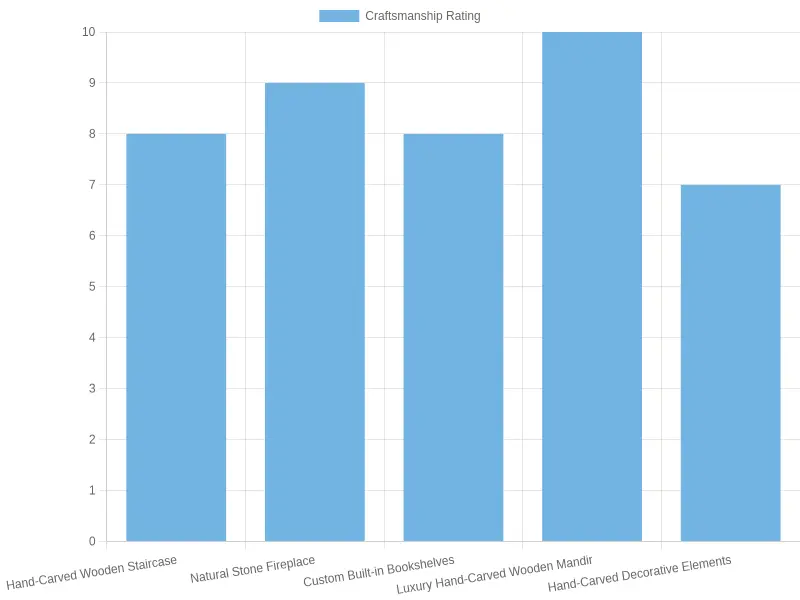
Below is a comparison of craftsmanship ratings for key interior features commonly found in legacy homes:
| Interior Feature | Craftsmanship Rating (1-10) | Key Characteristic |
|---|---|---|
| Hand-Carved Wooden Staircase | 8 | Intricate scrollwork and custom joinery |
| Natural Stone Fireplace | 9 | Hand-selected stones, organic texture |
| Custom Built-in Bookshelves | 8 | Precision fit, warm wood tones |
| Luxury Hand-Carved Wooden Mandir | 10 | Ornate floral detailing, spiritual artistry |
| Hand-Carved Decorative Elements | 7 | Accent pieces enhancing overall charm |
Every element in a legacy home tells a story of quality, permanence, and artistry – the very hallmarks of a structure built to last for generations.
Conclusion: Building Your Legacy as a Builder
We began this guide by posing a question that every ambitious builder must eventually confront: Do you build houses, or do you build legacies? The answer, as we’ve explored, determines not just the quality of the homes you deliver but the entire trajectory of your business.
Legacy home construction is more than a premium service offering – it is an investment in your own reputation as a builder. Every foundation you pour, every material you select, and every finish you perfect becomes a chapter in the story of your brand. When you commit to this model, you stop competing on price and start competing on permanence.
Here is what separates the builders who thrive from those who merely survive:
-
Premium materials command premium prices. When you source the finest stone, timber, and fixtures, you attract clients who value quality over cost – and who are willing to pay for it. This isn’t about inflating margins; it’s about aligning your pricing with the excellence you deliver.
-
Timeless design drives referral business. Trends fade, but architecture rooted in proportion, craftsmanship, and enduring aesthetics generates word-of-mouth that no marketing budget can buy. A legacy home becomes its own best salesperson – every visitor is a potential future client.
-
Early adopters will dominate the high-end market. The luxury segment is not yet saturated with builders who fully embrace this philosophy. Those who act now – who refine their processes, cultivate relationships with artisan suppliers, and invest in luxury home construction – will define the standards that others will scramble to match.
The market is shifting. Discerning homeowners no longer want cookie-cutter solutions; they want partners who can translate their vision into something that lasts generations. By positioning yourself at the forefront of custom homes in Hawaii and beyond, you secure not just a project pipeline but a lasting reputation.
Here is your challenge: Before this quarter ends, identify one project – even if it is a single-room renovation or a modest custom build – and treat it as your legacy prototype. Apply everything we have discussed: source the best materials, insist on timeless design, and document the process. Use that project as your proof of concept, your portfolio centerpiece, and the foundation of a brand that endures.
The homes you build today will outlive you. Make sure they speak well of you.